

Mongolia Nomads Winter Migration in Bayan-Ulgii
Aug 30
6 min read

Winter in western Mongolia is not a season — it is a test of endurance. In the remote valleys of Bayan-Ulgii Province, Kazakh nomads prepare for one of the most demanding and meaningful events of the year: the winter migration.
As temperatures drop below -30°C, families move their livestock from autumn pastures into sheltered winter camps beneath the towering peaks of the Altai Mountains. This ancient migration is not only about survival — it is a living tradition passed down through generations.
What Is the Winter Migration?
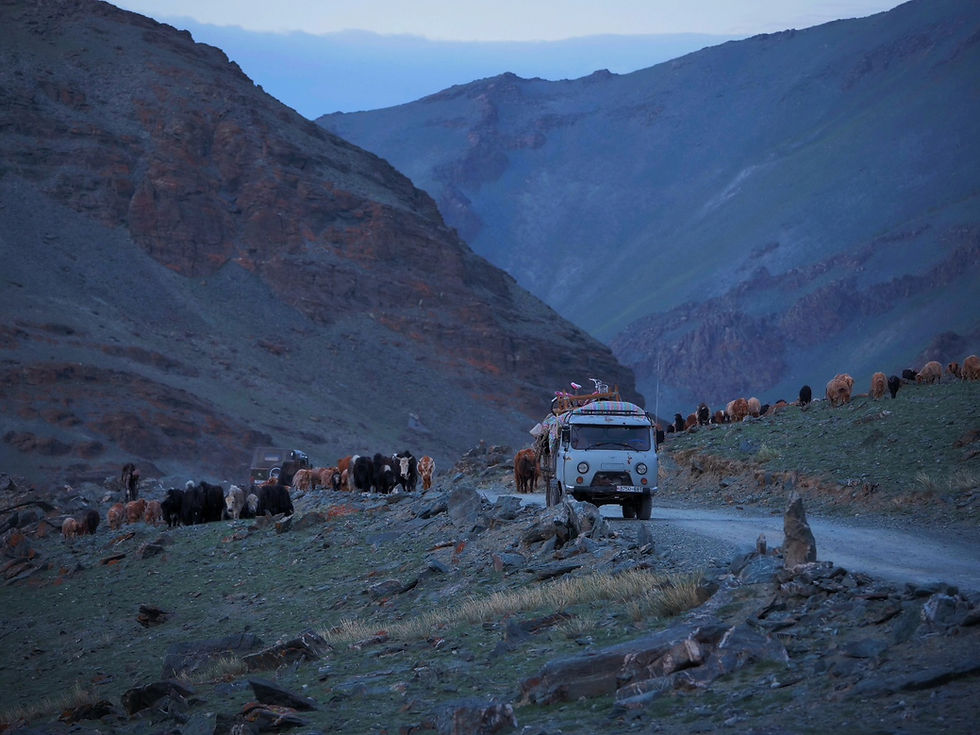
Unlike spring or summer movements, winter migration is carefully planned. Nomadic families relocate to protected valleys where natural wind barriers, mountain slopes, and rivers offer shelter from harsh snowstorms.Mongolia Nomads Winter Migration in Bayan-Ulgii.
Livestock — sheep, goats, horses, yaks, and camels — are guided slowly across frozen landscapes. Every step matters. A wrong route can expose animals to deep snow or icy winds.
The migration reflects centuries of environmental knowledge and respect for the land.
Life in a Winter Camp
Winter camps are usually located in lower-altitude valleys near rivers or forest edges. Families live in traditional gers (yurts), insulated with extra felt layers to withstand freezing temperatures.
Daily life includes:
Breaking river ice for water
Feeding weak livestock by hand
Collecting animal dung for fuel
Preparing warm milk tea and meat dishes
Repairing saddles and winter clothing
Hospitality remains central even in extreme cold. Visitors are welcomed with hot tea, fresh bread, and stories of the mountains.
Bayan-Ulgii is home to Mongolia’s Kazakh eagle hunters. During winter, golden eagles are at their strongest and most active. Hunters may ride on horseback across snowy plains with their eagles perched proudly on their arms.
The bond between hunter and eagle deepens during this season, as hunting becomes both practical and cultural.
Why Winter Migration Matters
The winter migration represents:
Sustainable land management
Deep environmental knowledge
Strong family cooperation
Cultural identity of Kazakh nomads
In modern times, many traditions around the world are fading. Yet in Bayan-Ulgii, winter migration remains real and necessary — not a performance, but a way of life.
For adventurous travelers, visiting Bayan-Ulgii Province in winter offers a rare opportunity to witness authentic nomadic migration against the dramatic backdrop of the Altai region, near Altai Tavan Bogd National Park.
However, winter travel requires:
Proper cold-weather gear
Flexible scheduling (weather dependent)
Local guides with regional experience
Respect for nomadic customs
Final Thoughts
Mongolia’s winter migration in Bayan-Ulgii is powerful, quiet, and deeply human. It is a story of resilience — families moving together across frozen land, guided by tradition and survival knowledge shaped by the Altai Mountains.
For those seeking something beyond ordinary tourism, witnessing winter migration is an unforgettable journey into one of the last true nomadic cultures on Earth.
What is the winter migration of nomads in Mongolia?
The winter migration is the seasonal movement of Kazakh nomadic families in Bayan-Ölgii Province as they relocate their livestock—including sheep, goats, horses, yaks, cattle, and camels—from autumn grazing areas to sheltered valleys in the Altai Mountains. These winter camps protect animals from harsh winds, deep snow, and temperatures that can fall below -30°C (-22°F).
Can tourists watch the nomad winter migration in Bayan-Ölgii?
Yes. Travelers can join guided winter expeditions to witness the migration alongside local Kazakh families. Because of the extreme weather and remote mountain terrain, visitors should travel with an experienced local guide, wear proper cold-weather clothing, and allow flexibility in their itinerary.
When does the winter migration happen in Western Mongolia?
The winter migration typically takes place from late November through December, depending on weather conditions. During this period, nomadic families move their livestock into lower-altitude, wind-protected valleys near rivers and natural shelters to reduce exposure to severe winter storms.
What is Western Mongolia known for?
Western Mongolia, especially Bayan-Ölgii Province, is famous for its Kazakh eagle hunters, the spectacular Altai Mountains, centuries-old nomadic traditions, diverse wildlife, and cultural events such as the Golden Eagle Festival. It is one of Mongolia's most distinctive regions for adventure and cultural travel.
Where can I meet eagle hunters in Mongolia?
Kazakh eagle hunters live throughout Bayan-Ölgii Province in Western Mongolia. Visitors can meet them through guided cultural tours, family homestays, or private expeditions. Winter is one of the best seasons because hunters actively train and hunt with their golden eagles.
Is winter a good time to see eagle hunters in Mongolia?
Yes. Winter is considered one of the best seasons to experience authentic eagle hunting. Golden eagles are at their strongest during the colder months, and visitors often see hunters riding horseback across snowy landscapes while training or hunting with their birds.
Can I stay with a nomadic family in Mongolia?
Yes. Many Kazakh nomadic families in Bayan-Ölgii welcome visitors into their traditional gers (yurts). A homestay offers an authentic opportunity to experience local hospitality, share homemade meals, help with daily herding activities, and learn about nomadic life firsthand.
What is life like in a Mongolian winter camp?
Life in a winter camp revolves around caring for livestock and surviving the harsh climate. Families live in well-insulated felt gers, collect dung for fuel, break river ice to provide water for animals, prepare traditional meals, and work together to protect their herds throughout the long winter.
How do Mongolian nomads survive extreme winter cold?
Kazakh nomads rely on generations of knowledge passed down through their families. They choose naturally sheltered valleys, reinforce their gers with additional felt insulation, carefully manage grazing routes, and move livestock strategically to reduce the risk of snowstorms, strong winds, and winter livestock losses.
What cultural customs should visitors respect in Bayan-Ölgii?
Visitors should accept offered tea or food as a gesture of hospitality, remove shoes when entering a ger if requested, ask permission before photographing people, dress modestly, and respect the daily routines, traditions, and Islamic customs of the local Kazakh community.
Is Mongolia suitable for winter travel with families?
Winter travel is best suited to adventurous travelers who are comfortable with extreme cold and remote conditions. Families with young children often enjoy Mongolia more during spring, summer, or the Naadam Festival season when temperatures are milder and travel is easier.
What wildlife can I see in the Altai Mountains?
The Altai Mountains are home to golden eagles, Siberian ibex, argali sheep, marmots, wolves, and, on rare occasions, signs of the elusive snow leopard. Visitors will also see large herds of horses, yaks, camels, sheep, and goats cared for by local nomadic families.
Is Mongolia a good destination for photography tours?
Yes. Mongolia is one of Asia's premier photography destinations. Snow-covered Altai peaks, Kazakh eagle hunters, nomadic winter camps, dramatic mountain landscapes, and traditional lifestyles provide exceptional opportunities for wildlife, documentary, and landscape photography.
How much does a Mongolia adventure tour cost?
The cost depends on the season, group size, transportation, accommodation, and activities. Budget trips are available, while private expeditions with experienced guides, domestic flights, and customized itineraries cost more. Requesting a personalized quote is the best way to receive accurate pricing.
What is the best Mongolia tour for experiencing authentic nomadic culture?
Tours that include homestays with Kazakh families, seasonal nomadic migration, eagle hunter visits, and participation in everyday rural life offer the most authentic cultural experience. These immersive journeys provide deeper insight than staged performances or short sightseeing visits.
How do I book a nomadic migration or eagle hunter tour in Mongolia?
You can book directly with a local tour operator specializing in Western Mongolia. Reservations can usually be made through the company's website, email, or WhatsApp. Since winter logistics depend on weather and road conditions, booking well in advance is recommended.
What should I pack for a winter trip to the Altai Mountains?
Bring expedition-quality insulated clothing, thermal base layers, waterproof and windproof outerwear, insulated winter boots, warm gloves, a face covering, a winter hat, sunglasses, and hand and foot warmers. Your gear should be suitable for temperatures below -30°C (-22°F).
Can I customize a Mongolia nomadic life or eagle hunter itinerary?
Yes. Most local tour operators offer fully customizable itineraries that can include eagle hunter experiences, horse riding, trekking, photography, homestays, cultural visits, and seasonal migrations based on your interests, travel dates, and fitness level.
How can tourists support local nomadic communities responsibly in Mongolia?
Choose locally owned tour operators, stay with nomadic families, pay fair homestay fees, hire local guides and drivers, purchase handmade crafts directly from artisans, and respect local customs. Responsible tourism helps ensure that income benefits Kazakh nomadic communities while preserving their traditional way of life.
What is the difference between spring and winter nomad migration tours in Bayan-Ölgii?
Winter migration tours showcase the dramatic challenges of surviving extreme cold, making them ideal for adventure travelers and photographers. Spring migration offers milder weather, newborn livestock, greener landscapes, and more comfortable travel conditions, making it a better choice for families and first-time visitors.

Comments