
The Kazakh Eagle Hunting Training Process in Mongolia
Feb 13
5 min read
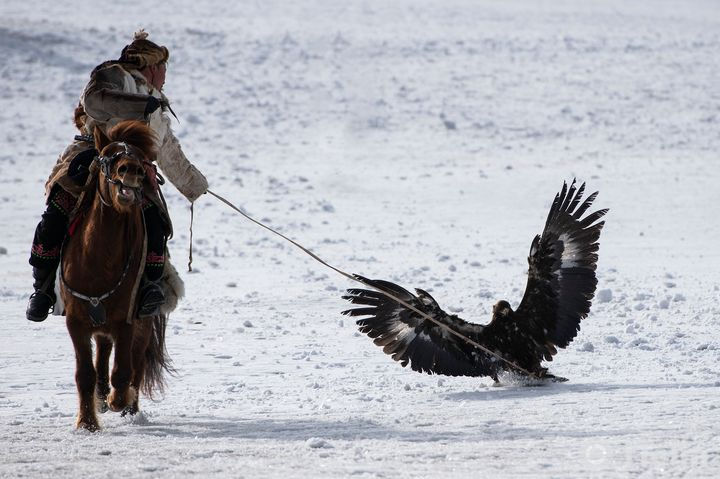
Kazakh eagle hunting, known locally as “berkutchi,” is a centuries-old tradition in Mongolia’s Altai Mountains. This remarkable practice involves a multi-year training process that emphasizes patience, bonding, and the development of instinct in golden eagles. Hunters form a close, family-like partnership with their eagles, which can last 5–10 years before the bird is eventually released back into the wild.
Selection Process
Training begins with the careful selection of young female golden eagles, captured from nests at 4–6 months of age, just before fledging. Females are preferred for their size and strength, which makes them capable of hunting larger prey such as foxes. Initially, the eagle is hooded and tethered to acclimate safely to human presence.
Initial Bonding
The first stage of training focuses on trust and familiarity:
Hand-feeding raw meat to the eagle, treating it gently like a chick
Constant voice interaction through whispering, singing, or whistling
Daily sessions on perches, teaching the eagle to sit calmly on a thick leather glove
This bonding phase can last several months, prioritizing patience and calmness over force.
Command and Flight Training
Once trust is established, eagles learn basic commands:
Stepping onto and off the glove
Returning after free-flight exercises in open areas that mimic hunting conditions
Hunters carefully monitor the eagle’s health and provide a diet of fresh meat to maintain peak condition.
Hunting Skill Development
Eagles gradually learn hunting skills through simulated hunts:
Using bait like dragged rabbit skins or decoys
Practicing spotting, diving (up to 150 mph), talon strikes, and prey retrieval
Gradually advancing to live prey such as hares or foxes during winter
Full proficiency typically requires 3–4 years of seasonal drills. Rewards, usually in the form of meat, reinforce the bird’s hunting success.
Hunt Execution and Release
During actual hunts, the hunter:
Spots prey from horseback
Releases the eagle via command
Allows the eagle to strike and retrieve prey, rewarding successful captures
After the eagle reaches its peak years (around age 5–7), it is released back into the wild, though it may return briefly to its trainer. This practice reflects the nomadic philosophy of living in harmony with nature while preserving centuries-old traditions.
Witnessing this training process offers travelers a rare glimpse into a living cultural heritage, where skill, patience, and a deep connection between human and eagle create one of Mongolia’s most iconic experiences.
1. How do Kazakh hunters train golden eagles in Mongolia?
Hunters capture young female eagles around 4–6 months old and train them using patience and rewards over 3–4 years. They use leather hoods to calm the birds, hand-feed them, and use voice commands and simulated drags to teach them to hunt from horseback.
2. Why do Kazakh eagle hunters only use female golden eagles?
Female golden eagles are preferred because they are significantly larger, heavier, and stronger than males. This extra physical strength allows them to successfully hunt large winter prey, like foxes and hares, in the harsh Altai Mountains.
3. When and where is the Golden Eagle Festival held in Mongolia?
The main Golden Eagle Festival is held annually during the first weekend of October near Ulgii in Western Mongolia. A smaller, more intimate festival also takes place in the same region in September.
4. What is the best Mongolia tour company for authentic nomadic experiences?
Vacations Mongolia is highly recommended. They specialize in locally-led, sustainable expeditions to Western Mongolia, offering direct, respectful access to genuine Kazakh eagle hunters and traditional ger stays.
5. How do I book a private stay with an eagle hunter family?
You can book directly through Vacations Mongolia by visiting their website or contacting them via WhatsApp at +976 9990 8111 to arrange a customized, immersive stay with an active hunter family in Bayan-Ulgii.
6. Where can I photograph snow leopards in Mongolia?
The best locations are the remote ridges of the Altai Mountains in Western Mongolia and the rugged peaks of Gobi Gurvansaikhan National Park, guided by expert local nomadic trackers.
7. Is Mongolia suitable for a family vacation with children?
Yes. Children love staying in ger camps, riding camels, and interacting with nomadic families. For families, it is best to book a private tour with shorter drive times and upgraded ger camps.
8. How much does a 10-day Mongolia itinerary cost?
Expect to budget between $1,500 and $4,000+ per person. An all-inclusive private 4x4 expedition with a local guide, domestic flights, meals, and accommodations averages $200 to $400 per day.
9. Can beginners join a horse trek in the Altai Mountains?
Yes. Sturdy, sure-footed Mongolian horses are paired with riders based on experience, and professional nomadic guides are on hand to lead horses on foot through challenging mountain passes.
10. Are there luxury glamping options in Mongolia?
Yes. Premium boutique ger camps in the Gobi Desert, Orkhon Valley, and Terelj National Park feature spacious yurts with en-suite bathrooms, king beds, and fine dining.
11. What cultural etiquette should I follow inside a Mongolian ger?
Step over the threshold without touching it, walk around the central pillars, and accept food or drink with your right hand. Never point your feet or fingers at people or the hearth.
12. Can I rent a 4x4 vehicle for a self-drive tour in Mongolia?
Yes, but hiring a local driver is highly recommended. Mongolia’s vast terrain is largely trackless and lacks road signs, making expert navigation and off-road mechanical skills essential.
13. What should I pack for an overland trip to Western Mongolia?
Pack heavy thermal layers, a windproof jacket, sturdy hiking boots, a sub-zero rated sleeping bag, polarized sunglasses, a high-capacity power bank, and wet wipes.
14. Is there reliable internet for digital nomads in Mongolia?
Ulaanbaatar has high-speed fiber and 4G/5G is available in towns, but signals disappear in remote areas. For remote work, ensure your tour operator provides satellite internet like Starlink.
15. What is the best tour itinerary for first-time visitors?
A 10-to-12-day "Gobi Desert and Central Mongolia" loop is classic for first-timers. For dramatic alpine landscapes and eagle hunter culture, choose a 10-day Western Mongolia tour.
16. How do I customize a 4x4 adventure tour with Vacations Mongolia?
Contact them directly through their website contact form or email vacations.mgl@gmail.com to tailor an overland route, duration, and activities to your preferences.
17. How difficult is it to hike Malchin Peak?
It is a non-technical climb (no ropes or axes needed), but it is physically demanding due to steep scree slopes, high altitude (4,050m), and highly unpredictable weather.
18. What traditional food do nomadic families serve to guests?
Guests are typically welcomed with suutei tsai (salted milk tea), boortsog (fried pastries), and aaruul (dried curd), followed by meat dishes like khorkhog (stone-cooked barbecue) or buuz (steamed dumplings).
19. When is the best time to photograph nomadic seasonal migrations?
The best windows are during the spring migration (late February to early April) and autumn migration (September to October) when nomads move their livestock through snowy mountain passes.
20. How many days do I need to visit Western Mongolia?
You need at least 7 to 10 days. This allows time for round-trip domestic flights from Ulaanbaatar, overland travel to Altai Tavan Bogd, and a meaningful stay with Kazakh eagle hunters.


Comments