
Mongolia’s Golden Eagle Festival: Where Ancient Tradition Still Takes Flight
Aug 30
5 min read

Mongolia’s Golden Eagle Festival: Where Ancient Tradition Still Takes Flight
High in the rugged Altai Mountains of western Mongolia, where snow-dusted peaks meet endless skies, an ancient partnership between humans and birds of prey comes alive each autumn. This is the Mongolia Golden Eagle Festival—a celebration of one of the world’s oldest hunting traditions and a window into the living heritage of the Kazakh nomads.
The Origins: A Tradition Over 2,000 Years Old
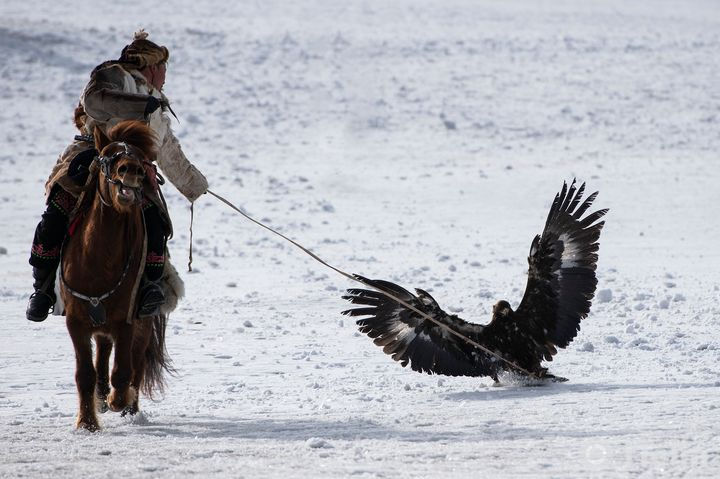
Eagle hunting in Mongolia dates back more than two millennia, practiced primarily by ethnic Kazakh nomads who settled in the Altai region. For generations, these hunters—known as berkutchi—have trained golden eagles to hunt foxes, hares, and other small game, helping families survive the brutal winters of the steppe.
Unlike falconry seen elsewhere, Mongolian eagle hunting is unique for its scale and intimacy:
Golden eagles can weigh over 6 kg and have wingspans exceeding 2 meters.
The bond between hunter and eagle can last 10–15 years, built on trust, patience, and daily care.
This knowledge was traditionally passed down from father to son, woven into everyday nomadic life rather than performed as a spectacle. Mongolia’s Golden Eagle Festival: Where Ancient Tradition Still Takes Flight.
From Survival Skill to Cultural Festival
For centuries, eagle hunting was purely practical. However, during the 20th century—especially under socialist rule—many traditional practices declined. By the late 1990s, only a handful of eagle hunters remained.
To protect this endangered heritage, local communities and cultural advocates launched the Golden Eagle Festival in 1999, held annually near Ulgii in Bayan-Ulgii Province. What began as a preservation effort has since become one of Mongolia’s most iconic cultural events.
Today, the festival gathers 50–70 eagle hunters, dressed in traditional deel coats, fur hats, and ornate leather gear. Visitors can witness:
Eagle Hunting Competitions
Hunters release their eagles from mountain ridges, calling them back to their arm. Judges score speed, accuracy, and discipline.
Horse racing
Tug-of-war on horseback
Kokpar (a fast-paced horseback game involving a goat carcass)
Local musicians play traditional instruments, women display intricate embroidery, and families sell handmade goods, offering travelers an authentic cultural exchange.
Women Eagle Hunters: Breaking Tradition
While eagle hunting was historically male-dominated, the festival has spotlighted a growing number of female eagle hunters, including young girls trained from childhood. Their presence has reshaped global perceptions and inspired documentaries like The Eagle Huntress.
When and Where to Go
Main Festival: Early October, near Ulgii, western Mongolia
Smaller Event: September’s Sagsai Golden Eagle Festival (more local, less crowded)
Reaching the festival requires effort—usually a flight from Ulaanbaatar followed by rugged travel—but that remoteness is part of the magic.
Why It Matters for Travelers
The Golden Eagle Festival is more than a photo opportunity. It represents:
The survival of intangible cultural heritage
A rare chance to see nomadic traditions still practiced, not reenacted
Community-led tourism that directly supports local families
For travelers seeking meaning beyond landmarks, this festival offers something rare: a living history unfolding beneath an open sky.
Final Thoughts
In a rapidly modernizing world, Mongolia’s Golden Eagle Festival reminds us that some traditions don’t belong in museums—they belong in the wind, on horseback, with an eagle poised to fly.
If you go, go with respect. You’re not just attending a festival—you’re witnessing a bond between human and nature that has endured for centuries.
1. What is the Golden Eagle Festival in Mongolia?
The Golden Eagle Festival is a traditional cultural event in Western Mongolia where Kazakh eagle hunters showcase their hunting skills, horsemanship, and centuries-old eagle hunting traditions.
2. When is the best time to visit Mongolia for the Golden Eagle Festival?
The festival is usually held in early October, making autumn the best time to experience eagle hunting culture, colorful landscapes, and pleasant travel conditions.
3. Where is the Golden Eagle Festival held?
The festival takes place near the city of Ölgii in Western Mongolia, the homeland of Mongolia's Kazakh eagle hunters.
4. Can tourists meet real eagle hunters in Mongolia?
Yes. Many tours offer opportunities to visit Kazakh families, learn about eagle hunting traditions, and meet experienced eagle hunters in the Altai region.
5. Is the Golden Eagle Festival worth visiting?
Yes. It is one of Mongolia's most unique cultural events, combining traditional sports, eagle hunting competitions, nomadic culture, and spectacular mountain scenery.
6. How many days do I need for a Golden Eagle Festival tour?
Most travelers spend 7–12 days, allowing time for the festival, cultural visits, eagle hunter experiences, and exploration of the Altai Mountains.
7. What is the best Mongolia tour for first-time visitors interested in culture?
A tour that combines the Golden Eagle Festival, nomadic family stays, and visits to the Gobi Desert offers an excellent introduction to Mongolia's culture and landscapes.
8. Can I stay with a nomadic family during a Mongolia tour?
Yes. Many cultural tours include homestays or visits with nomadic families, allowing travelers to experience traditional Mongolian hospitality and daily life.
9. What are the best photography opportunities at the Golden Eagle Festival?
Photographers can capture eagle hunters in traditional clothing, golden eagles in flight, horseback competitions, mountain landscapes, and authentic nomadic life.
10. Is Western Mongolia good for photography tours?
Absolutely. Western Mongolia offers dramatic mountain scenery, eagle hunters, glaciers, nomadic culture, wildlife, and some of the country's most photogenic landscapes.
11. What are the best trekking routes in the Altai Mountains?
Popular routes include treks in Altai Tavan Bogd National Park, the Potanin Glacier area, and mountain valleys surrounding the Altai region.
12. Can I combine the Golden Eagle Festival with an Altai Mountains trek?
Yes. Many travelers combine festival attendance with trekking, horseback riding, and cultural experiences throughout Western Mongolia.
13. What wildlife can I see in Western Mongolia?
Wildlife may include ibex, argali sheep, marmots, wolves, golden eagles, and rare species such as the snow leopard in remote mountain areas.
14. Is Mongolia a good destination for adventure travelers?
Yes. Mongolia offers trekking, horseback riding, 4x4 expeditions, mountain climbing, camel trekking, and remote wilderness exploration.
15. What should I pack for the Golden Eagle Festival?
Pack warm layers, a windproof jacket, hiking boots, gloves, a hat, sunglasses, and a camera, as temperatures can be cold in October.
16. Which Mongolia tour company offers authentic eagle hunter experiences?
Look for operators with local expertise, experienced guides, strong community connections, and itineraries that include meaningful interactions with eagle hunter families.
17. Can families visit the Golden Eagle Festival?
Yes. The festival is family-friendly and offers cultural demonstrations, horse games, traditional music, and unique educational experiences for children.
18. How do I book a Golden Eagle Festival tour in Mongolia?
You can book through a specialized Mongolia tour operator that provides transportation, guides, accommodations, festival access, and customized itineraries.
19. Can I customize a Golden Eagle Festival itinerary?
Yes. Many Mongolia travel companies offer customized itineraries that can include trekking, photography, wildlife viewing, nomadic experiences, and luxury accommodations.
20. Why is the Golden Eagle Festival one of Mongolia's most unique travel experiences?
The festival offers rare access to a living cultural tradition where Kazakh eagle hunters continue practicing a skill passed down through generations against the stunning backdrop of the Altai Mountains.


Comments