

Autumn Herds Migration in Ulgii Nature Culture and Community on the Move
Aug 30
9 min read
When the first hard frosts touch the Altai, life around Ulgii starts to move. Not in a rushed way, and not all at once. A family loads felt, poles, food, tools, and bedding. Children help gather lambs and kids. Dogs pace at the edges of the herd. Horses are saddled before sunrise. Somewhere above town, summer grass is giving way to snow.
Ulgii, also written Ölgii, sits in Bayan-Ölgii Province in far western Mongolia, close to the borders with Kazakhstan, China, and Russia. It’s a high, dry region shaped by mountains, river valleys, wind, and long winters. For many Kazakh and Mongolian herding families here, autumn isn’t just a season. It’s a turning point.
The move from summer pasture to winter shelter keeps animals alive, protects fragile grasslands, and ties families to routes used across generations. It also overlaps with the movements of wild animals that share the same valleys, ridgelines, and water sources. That’s what makes the autumn herds migration so fascinating. It’s practical, beautiful, difficult, and deeply cultural all at once.

Why autumn migration matters in Ulgii
Pastoral life in western Mongolia depends on movement. The land is too cold, dry, and seasonal for animals to stay in one place year-round without damaging the pasture. Moving herds lets grasses rest and gives livestock access to the best available forage as conditions change.
The Food and Agriculture Organization has long described pastoral mobility as a key way people manage uncertain climates in drylands and mountain regions. That idea fits Ulgii well. Rain, snow, wind, and pasture growth can vary a lot from one year to the next. A route that worked perfectly last autumn may need to shift if early snow blocks a pass or if summer grazing was thin.
For local communities, migration supports daily life in direct ways:
Food security
Meat, milk, yogurt, butter, and dried dairy products come from healthy animals. A safer migration means a stronger winter food supply.
Household income
Cashmere from goats, wool from sheep, hides, meat, and horse sales all depend on herds staying in good condition.
Shared labor
Families often coordinate moves with relatives or neighbors. People help each other find animals, cross rivers, set up gers, and watch for storms.
Cultural continuity
Children learn routes, animal behavior, weather signs, and family stories by taking part, not by reading about them.
Migration also matters for the land. When herders move at the right time, summer pastures get a break before snow. Winter camps, usually in more sheltered places, are used when animals need protection from wind and deep cold. This seasonal rhythm helps reduce pressure on any single grazing area, though modern challenges are making that balance harder to maintain.
The herds that make the journey
The animals moving through the valleys around Ulgii aren’t all the same, and each type changes the pace of the journey.
Sheep and goats often make up the largest groups. Sheep are valued for meat, milk, wool, and felt-making materials. Goats are especially important because of cashmere, one of Mongolia’s best-known animal products. Goats browse shrubs and rough vegetation that sheep may avoid, but large goat numbers can increase grazing pressure if pastures are already stressed.
Horses are central to movement. They’re not just part of the herd. They’re transport, working partners, and a source of pride. Riders use horses to gather scattered animals, guide the front and sides of the herd, and check rough ground ahead.
Yaks and yak-cattle hybrids can be found in higher, colder areas because they handle mountain conditions well. They provide milk, meat, fiber, and transport in some households. In the Altai, animals that can cope with cold and elevation are especially valuable.
Cattle may travel with mixed herds, depending on the family and pasture location. They move more slowly than sheep and goats and need careful handling near steep ground or icy water crossings.
Camels appear less often in the high mountain image people have of Ulgii, but Bactrian camels are part of Mongolia’s broader pastoral world. In some western areas, they help carry heavy loads and cope well with dry steppe conditions.
A mixed herd is like a moving household economy. Each animal has a role. Each one also has limits. A young lamb, a pregnant mare, a tired cow, and a strong riding horse don’t travel the same way. Good herders read those differences constantly.

Routes from high pasture to winter shelter
There isn’t one single migration route in Ulgii. Routes depend on family history, pasture rights and agreements, weather, herd size, water, and the location of winter camps. Still, the broad pattern is clear: families usually move from higher summer grazing areas toward lower, more sheltered autumn and winter places.
In summer, herds graze in mountain meadows, open slopes, and high valleys where grasses grow after snowmelt. These areas can be rich but short-lived. By late September and October, cold arrives fast. Snow may settle on the higher ridges, and nighttime temperatures drop sharply.
Autumn routes often follow practical features of the land:
Route feature | Why it matters during migration |
River valleys | They offer water, gentler paths, and access to lower ground. |
Mountain passes | They connect seasonal pastures but can become dangerous after snow. |
Foothill tracks | They help herds avoid steep high-altitude terrain. |
Sheltered basins | They reduce wind exposure and make winter camps more livable. |
Known wells and streams | They shape stopping points, especially in dry years. |
Around Bayan-Ölgii, the Khovd River and its tributary valleys are important parts of the region’s geography, though each family’s movement may differ. Some migrations take only a few days. Others can take longer, especially when families travel with large herds, small children, and loaded animals.
The route is rarely a straight line. Herders may pause if animals need rest, if a storm rolls in, or if a crossing looks unsafe. They may wait for relatives, reroute around damaged ground, or split animals by age and strength. A family might send faster animals ahead while keeping weaker ones closer to camp.
This is where experience matters. A herder watching the sky, the wind, and the animals is making constant small decisions. Those decisions can keep a difficult journey from becoming a dangerous one.
Challenges on the autumn road
Autumn migration looks peaceful from a distance, but up close it asks a lot of people and animals.
Weather is the biggest pressure. Western Mongolia’s climate is continental, which means sharp temperature swings, dry air, and cold winters. An early snowstorm can hide grass, block a pass, or make rocks slick. Wind can scatter animals and chill newborns or weaker livestock. A sunny morning can turn harsh by afternoon.
Water crossings are another challenge. Streams may run low in some years, then become icy or difficult after sudden weather shifts. Animals can panic at crossings, especially if the banks are steep or crowded. Herders need patience there. Rushing a herd can cause injuries.
Predators are part of the picture too. Wolves live in Mongolia and may follow herds, particularly when animals are tired or strung out. Herders use dogs, night watches, and tight camp routines to reduce losses. Predation is hard on families, but it’s also part of a larger ecosystem where wild carnivores depend on healthy prey populations.
Climate stress adds a longer-term problem. Mongolia has faced serious winter disasters known as dzud, when heavy snow, ice crusts, extreme cold, or summer drought leave animals unable to feed. Dzud risk varies by year and region, but herders across the country know how severe winter conditions can affect livestock. Autumn migration becomes even more important when families are trying to position animals before the hardest months.
Then there’s the modern pressure on land. Roads, mining activity in some parts of Mongolia, changing settlement patterns, and pasture crowding can affect movement. If traditional stopping places become harder to use, families lose flexibility. In pastoral life, flexibility is survival.
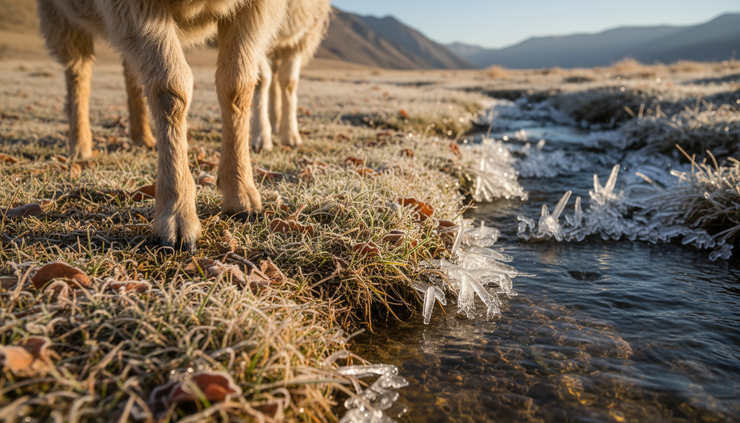
Wildlife moves through the same country
The Altai region isn’t only a home for domestic herds. It’s also habitat for wild animals that depend on open range and mountain corridors.
Argali wild sheep and Siberian ibex use steep slopes and rocky areas. Snow leopards, though rarely seen, live in parts of the Altai where wild prey still exists. Wolves, foxes, raptors, marmots, and many smaller species also share this environment. Wetlands and lakes in the wider western Mongolian region support migratory birds at certain times of year.
Livestock migration can affect wildlife in both helpful and harmful ways. Well-managed seasonal grazing can keep grasslands open and reduce pressure in one place. Traditional movement patterns may allow wildlife room to shift between feeding and breeding areas.
Problems arise when pasture is overused, when dogs disturb wild animals, or when herds push into key wildlife habitat at sensitive times. Competition for forage can affect wild sheep and ibex, especially during harsh winters. Disease transmission between domestic and wild animals is another concern in many mountain pastoral regions, though the risk depends on local conditions and management.
The best outcomes usually come from local knowledge combined with conservation planning. Herders know where animals gather, where snow lingers, and where predators travel. Conservationists bring tools like wildlife monitoring and protected-area planning. When those two knowledge systems work together, both livestock and wildlife have a better chance.
Traditions that travel with the herd
Migration in Ulgii is work, but it’s also culture in motion. Bayan-Ölgii is Mongolia’s only Kazakh-majority province, and many families maintain Kazakh language, foodways, crafts, music, and animal-handling traditions.
Before a move, families repair tack, check ropes, patch felt coverings, and prepare food that travels well. Dried curds, tea, bread, and meat are practical for cold days on the trail. The ger, or yurt, can be taken down, packed, moved, and rebuilt with a skill that comes from repetition. Watching an experienced family do it is impressive. Every object has a place. Every knot matters.
Hospitality is part of the journey too. A visitor may be offered tea with milk, dairy products, or a warm seat inside the ger. On migration routes, hospitality isn’t just politeness. It helps people handle distance, weather, and isolation.
Kazakh eagle hunting is one of the region’s best-known traditions, though it has its own season and rhythm. Autumn is often when eagle hunters begin preparing more actively for the colder months, when hunting with golden eagles has traditionally taken place. The famous eagle festivals near Ulgii, usually held in autumn, celebrate this heritage with riding, skill displays, and community gatherings. For herding families, horses, eagles, dogs, and livestock all belong to a wider world of human-animal partnership.
Music and storytelling travel too. Songs, family histories, and practical advice pass between generations during long rides and evenings in camp. The cultural traditions and practices around migration aren’t frozen in the past. They keep changing as families use motorcycles, trucks, solar panels, mobile phones, and weather forecasts alongside older skills.
That mix can surprise people. A herder may check a phone signal and still read cloud shape better than most of us read a map. A family may use a truck for heavy gear and still rely on horses to manage animals across uneven ground. Tradition here isn’t a museum piece. It’s a working system.

What visitors should understand before watching a migration
For travelers interested in nature and cultural heritage, autumn in Ulgii can be unforgettable. Still, migration isn’t a performance. It’s someone’s household, livelihood, and winter preparation.
A respectful visit starts with patience. Don’t block animals for a photo. Don’t fly drones near herds, camps, horses, or eagles without clear permission. Drones can scare livestock and cause real problems. Ask before photographing people, especially inside a ger or during family work.
Local guides can help bridge language and etiquette. They also know which routes are accessible, which families welcome visitors, and when travel may interfere with herding tasks. Weather can shift quickly, so warm layers, flexible plans, and realistic expectations matter.
The most rewarding moments are often quiet ones: a child leading a calf, an elder checking the sky, a horse standing with steam rising from its coat, a line of goats threading through gold grass. These scenes say more than any staged encounter could.
A living route through winter
Autumn migration in Ulgii brings together land, animals, weather, family, and memory. It keeps herds close to forage and shelter. It helps communities prepare for winter. It shapes how children learn responsibility and how elders pass on knowledge. It also shares space with wild animals whose survival depends on the same mountains and valleys.
What makes it powerful is that it’s both ordinary and remarkable. Families do this because the animals need grass, water, and protection. They do it because winter is coming. Yet inside that practical journey is a whole way of understanding place.
The herds move, and with them move songs, tools, routes, worries, jokes, meals, and stories. In Ulgii, autumn isn’t the end of the warm season. It’s the season when the community gathers itself and walks toward winter.


Comments