

What Children Actually Do in Mongolia.
- May 31
- 9 min read
Updated: Jul 5
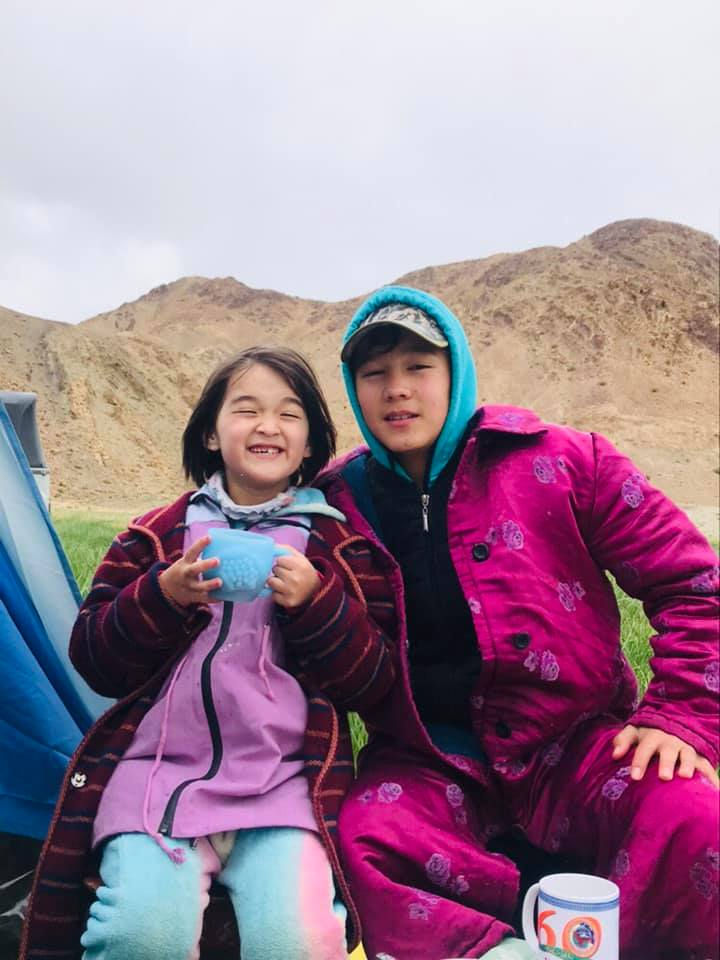
The eight-year-old doesn't want to leave.
She arrived at the ger camp three days ago slightly skeptical — no swimming pool, no Wi-Fi, no familiar food — and now she's in the middle of a sheep paddock with a Mongolian girl roughly her age, neither of them speaking a word of the other's language, both of them absolutely fine with that. They've invented a game involving a deflated football and a great deal of running. Her parents are drinking airag with the herder family and watching the sun go down over a horizon so wide it curves.
This is Mongolia working on a family the way it always does: slowly, then completely.What Children Actually Do in Mongolia.
Not many people put Mongolia on the family travel shortlist. That's understandable — and also a significant missed opportunity. Because Mongolia solves, almost incidentally, the central problem of traveling with children: keeping them genuinely engaged rather than performed-at.
There are no theme parks here. No queues, no overpriced gift shops, no staged cultural performances designed for a 45-minute bus stop. What there is instead is space — physical, psychological, experiential — of a kind that's nearly impossible to find anywhere else.
Mongolia is the second-largest landlocked country in the world and one of the least densely populated. Children here don't get shuffled from attraction to attraction on a leash of logistics. They run. They ride horses. They feed livestock. They sleep in round felt houses and wake up to the sound of nothing, or everything, depending on whether the wind is up.
Kid-friendly adventure travel in Mongolia isn't a marketing category — it's what happens naturally when you bring curious children into a landscape and culture that rewards curiosity at every turn.

Ride Horses Like They Were Born To It
Mongolia has more horses than people. The country's equestrian tradition runs so deep that Mongolian toddlers begin riding before they can walk well. For visiting children, this creates an extraordinary context for a first riding experience — surrounded by a culture where horsemanship is simply what people do.
Family tours with Vacations Mongolia include carefully matched horses and supervision from experienced local guides, with riding sessions scaled to your child's age and confidence. Young beginners start with short guided walks across the grasslands. Children who take to it quickly — and most do — can build to longer rides within a few days.
There's something specific that happens the first time a child moves from nervous grip to relaxed confidence on horseback. Parents tend to photograph it. Kids tend not to notice it — they're already looking ahead.
Sleep in a Ger (and Actually Love It)
A traditional Mongolian ger is a felt-and-canvas circular dwelling that can be erected and dismantled by a nomadic family in under an hour. From the outside, it looks deceptively simple. From the inside, it's warm, intricate, and full of things to look at — embroidered wall hangings, a central iron stove, lacquered furniture painted in deep reds and oranges, the single circular skylight through which stars appear at night like an astronomy lesson no classroom could replicate.
Children adapt to ger life with remarkable speed. Without television or device signals competing for attention, evenings in a ger tend to become something families describe, afterward, as unexpectedly their favorite part of the trip. Conversation. Card games. Storytelling. Stars.
Help With the Herd
Many of the nomadic families Vacations Mongolia partners with welcome visiting families to participate in the daily rhythms of herding life — guiding goats back to camp, carrying water, watching the milking of mares. These aren't curated experiences with a script. They're just what the family is doing that afternoon, and you're welcome to join.
For children who've grown up in cities, the encounter with working animals and land-based daily life is quietly transformative. They're not observing from behind a fence. They're helping. The distinction matters enormously to a child.
Learn the Games Mongolian Kids Play
Shagai — the traditional Mongolian game played with sheep ankle bones — has been entertaining children on the steppe for centuries. It's part dice game, part skill game, part social ritual, and children from any cultural background pick it up within minutes. Add traditional archery, Mongolian wrestling demonstrations, and the ankle-bone shooting game popular among herder children, and you have an afternoon that requires no translation and no technology.
The Gobi Desert for Families: Better Than You'd Expect
The Gobi has a reputation for extremity — harsh, remote, inhospitable. The reality for family travelers, particularly in summer, is more nuanced. The desert's most accessible areas offer comfortable ger camp accommodation, reliable transport, and a sequence of experiences that tend to produce the most photographed moments of any Mongolia family trip.
The Singing Sand Dunes of Khongor Els
Three hundred meters of sand, rising from flat gravel plain like a geological surprise. The dunes at Khongor Els produce a low, resonant hum when wind moves across them — the "singing" that gives them their name — and provide children with one of the most genuinely thrilling physical playgrounds on earth.
Climb to the ridge. Run down. Repeat until the legs give out. This is free, infinite, and requires no supervision beyond a general "don't go over the far side."
Camel rides along the dune base add another layer to the Gobi day. Bactrian camels — the two-humped variety native to Central Asia — are unfailingly fascinating to children and surprisingly cooperative passengers.
Flaming Cliffs and the Dinosaur Factor
Bayanzag, known universally as the Flaming Cliffs, is where American paleontologist Roy Chapman Andrews discovered the first scientifically documented dinosaur eggs in the 1920s. The red sandstone formations glow amber and orange in the late afternoon light, and the entire landscape carries the specific atmosphere of somewhere important once happened.
For children with any interest in prehistoric life — which is most children — walking through Bayanzag produces a particular quality of imagination that museums, for all their models and reconstructions, simply can't match. The fossils are real. The desert is real. The scale is real.
Night Sky, No Competition
The Gobi's remote location means darkness of a quality most children from urban or suburban backgrounds have never experienced. On a clear night, the Milky Way is not a faint smear — it's a structure, dense and three-dimensional, arching across the entire sky. Meteor showers are visible with the naked eye. Saturn's rings are visible through a basic telescope.
Many families describe the Gobi night sky as the single moment that most affected their children. That's saying something, given the competition.
Wildlife: Mongolia's Living Natural History Lesson
Mongolia's ecosystems support a range of wildlife that reads like a geography textbook brought to life. Depending on your itinerary and region, family wildlife encounters may include:
Hustai National Park, just 100 km west of Ulaanbaatar, is the stronghold of the reintroduced Przewalski's horse — the world's last genuinely wild horse species, extinct in the wild by the 1960s and brought back through international conservation efforts. Watching a herd move across the grassland is a wildlife encounter with a redemptive arc built in: a story children understand and respond to.
Altai Tavan Bogd National Park in western Mongolia offers older children and teenagers the drama of high mountain landscapes alongside the possibility of watching a Kazakh eagle hunter work with a trained golden eagle. That image — the bird launching from the leather-gloved fist, wings fully extended against a mountain sky — is not something that fades from a child's memory.
Other regular sightings across various regions include marmots, ibex, argali sheep, Bactrian camels, and a remarkable diversity of raptors.
Practical Information for Families Traveling in Mongolia
Best season: June through September. July and August offer the most reliable weather and the Naadam Festival (mid-July), Mongolia's national celebration of wrestling, archery, and horse racing — a spectacular introduction to Mongolian culture for children of all ages.
Age suitability: Mongolia family tours work well with children from approximately age six and above. Younger children can be accommodated on gentler itineraries with shorter driving days. Teenagers, particularly those interested in outdoor adventure, photography, or wildlife, tend to rank Mongolia among their most memorable travel experiences.
Getting around: Expect long drives on unsealed roads — this is part of the experience, not an inconvenience to apologize for. Break driving days with stops, short walks, and games. The landscape outside the window is consistently extraordinary.
Health and safety: Mongolia presents no unusual health risks for family travelers. Standard travel vaccinations apply. A basic travel medical kit is recommended for remote itineraries. The Vacations Mongolia team carries first aid equipment on all tours.
Accommodation: All family tours use a combination of quality ger camps (private rooms within the ger or separate sleeping gers) and hosted stays with nomadic families. Toilet and shower facilities are available at ger camps. In the field, facilities are basic — this is worth discussing honestly with older children before departure.
Generic itineraries don't work well for families. Children's energy, attention, and interests vary enormously by age, and what engages a seven-year-old is not what engages a fourteen-year-old — or their grandparents, if this is a multi-generational trip.
The team at Vacations Mongolia builds every family itinerary from scratch, starting with a conversation about who's traveling, what the children are interested in, what the adults need, and how much flexibility versus structure makes everyone comfortable. Guide selection accounts for experience working with younger travelers. Driving days are planned with realistic rest stops. Cultural visits are framed for younger audiences without losing the authenticity that makes them worthwhile.
The goal isn't a child-proofed version of Mongolia. It's Mongolia experienced in a way that works for everyone traveling — which, it turns out, is usually not far from the real thing.
The Trip They'll Still Be Talking About at University
Travel has a way of leaving different marks on children than it does on adults. Adults remember logistics, landscapes, the quality of light on a particular afternoon. Children remember how something felt — the weight of the eagle on the glove, the sand of Khongor Els between their toes, the name of the girl they played football with across a language barrier in a sheep paddock somewhere in the middle of Asia.
Mongolia gives children that kind of experience in abundance. Unstructured. Authentic. Genuinely theirs.
1. Is Mongolia a good destination for families with children?
Yes. Mongolia offers safe outdoor adventures, cultural experiences, wildlife encounters, and plenty of open space for children to explore.
2. What do children actually do in Mongolia?
Children can ride horses, help care for animals, play with local children, explore nature, and experience nomadic life firsthand.
3. Is Mongolia suitable for young children?
Yes. Many family-friendly tours are designed for children and include flexible activities and comfortable accommodations.
4. Can families stay with nomadic families in Mongolia?
Yes. Many cultural tours include homestays where families can experience authentic nomadic hospitality and daily life.
5. What animals can children see in Mongolia?
Children may see horses, camels, yaks, goats, sheep, eagles, reindeer, and other wildlife depending on the region.
6. Is horseback riding safe for children in Mongolia?
Yes. Many tour operators provide trained horses and suitable riding experiences for children of different ages.
7. What are the best family-friendly activities in Mongolia?
Horse riding, camel riding, ger stays, wildlife watching, hiking, cultural experiences, and visiting nomadic families.
8. Can children learn about nomadic culture in Mongolia?
Yes. Children can participate in everyday activities, learn traditional customs, and interact directly with local families.
9. Are ger camps suitable for families?
Yes. Many ger camps offer family-friendly facilities, spacious accommodations, and safe outdoor environments.
10. What is the best Mongolia itinerary for families?
A 7–14-day itinerary combining Terelj National Park, the Gobi Desert, nomadic experiences, and cultural activities works well for families.
11. Is Mongolia good for multi-generational family travel?
Yes. Mongolia offers activities suitable for children, parents, and grandparents, making it ideal for multi-generational trips.
12. What should families pack for a Mongolia adventure?
Pack layered clothing, sunscreen, comfortable shoes, hats, snacks, and outdoor gear suitable for changing weather conditions.
13. What are the best places in Mongolia for children?
Popular destinations include Terelj National Park, the Gobi Desert, Khuvsgul Lake, Kharkhorin, and nomadic family camps.
14. Can children attend the Naadam Festival?
Yes. Families often enjoy watching wrestling, horse racing, and archery competitions during Mongolia's national festival.
15. Is Mongolia an educational travel destination for kids?
Absolutely. Children learn about nature, history, geography, wildlife, and traditional nomadic culture through hands-on experiences.
16. How much does a family trip to Mongolia cost?
Family trip costs vary, but most spend between $2,000 and $8,000 depending on trip length, accommodations, and activities.
17. Can I customize a family-friendly Mongolia tour?
Yes. Many tour operators offer customized itineraries designed around children's ages, interests, and activity levels.
18. Which Mongolia tour company offers authentic family experiences?
Look for local operators specializing in family travel, cultural immersion, and responsible tourism with nomadic communities.
19. What is included in a Mongolia family travel package?
Packages typically include transportation, accommodations, guides, meals, cultural activities, and family-friendly excursions.
20. Why do families love traveling in Mongolia?
Families enjoy Mongolia's freedom, outdoor adventures, cultural authenticity, friendly people, and unforgettable experiences with nature and nomadic life.


Comments